
Tuesday, March 6, 2018
For Bots Sake--What the Heck are "Bots"????
"Bot" is short for "robot" and refers to automated software that resides in almost everything we buy and use these days, from cars to phones to refrigerators and stoves. Bots can be good bots or bad bots depending on who designs them. (If you haven't watched the 1968 movie "2001, A Space Odyssey" recently, you should. Hal is a bot who started good and turned bad.) Bots are really lines of computer code that reside in the software programs and devices that we use every day. If you order a Lyft or Uber car, there's a bot residing on your cell phone showing you exactly where the car is and when it will arrive. Bots are the result of programmers trying to make computers intelligent.Some bots reside within apps, but slowly and surely, bots are replacing apps.What does all this mean for us sales folks and business owners?Well, Chatbots are the wave of the future and we need to know about them. Siri, Google Home and Alexa are chatbots. We ask questions, they listen and “understand” and respond.Facebook Messenger will be incorporating a chatbot into their system. The future is coming fast. This is the Internet of Things (IofT). This is the digitization of everything. What to do? What to do?The first thing is to be aware of what's going on. The second thing is to know that there are bad bots that can do bad things, like infiltrate your computers or spread lies about your company.But good bots (“Chatbots”) are coming closer and closer to simulating human intelligence. Chatbots have already begun taking over customer service jobs, scheduling service and maintenance, scheduling orders and calling customers to tell them their order status. To quote Mark Zuckerberg of Facebook fame: “I don’t know anyone who likes calling a business. And no one wants to have to install a new app for every business or service that they interact with. We think you should be able to message a business, in the same way, you would message a friend.”

Monday, March 5, 2018
LinkedIn: Back from the Dead
 |
| Phoenix, rising from the dead |
One of the huge things that I came home with was a new appreciation of LinkedIn. LinkedIn has always been a place where everyone goes and writes their profiles and then never goes back. I have a friend who died five years ago but his profile is still alive and well and causes me sadness whenever I log on. LinkedIn has been a place of neglect.
MICROSOFT BOUGHT LINKEDIN FOR 26 BILLION DOLLARS IN 2016
In 2016, Microsoft bought LinkedIn and over the past two years has made it look very much like Facebook. What does this mean for us sales folks?1. It means that you better get back on and update your profile, fast, 'cause people are looking.
2. It means that you need a business presence on LinkedIn. You can now easily create a Company Page right from your profile page. Just click on "Work" on the top right of the page and a new window will open. Scroll to the bottom and you will see "Create a Company Page +"--and LinkedIn will lead you to the next steps.
3. Get involved. All of your colleagues probably have profiles (they're not updating). Link to them and they'll get the message.
4. Comment, post and make more industry friends. You'll be familiar with the format since it's a lot like Facebook.
5. LinkedIn is Facebook for business. You can find out who's doing what; who moved from one job to another; what's going on in your market place.
6. Finally, you can join groups that specialize in what your focus is. Again, you click on the "Work" tab on the upper right of the page and then click on "Groups" to find a list of groups that fits your profile. ("Bots" are amazing and the subject of my next post.)
7. At this level, everything is free. But I know sales managers who use LinkedIn premium which costs almost $800 a year. I will discuss Premium in one of my future posts.
LINK IN to LINKEDIN
Tuesday, January 9, 2018
Saban Makes Decision and the Tide "Rolls"
| Alabama Miracle Worker: Tua Tagovailoa |
There comes a time in the sales process when you may realize that you're going in the wrong direction--that you may lose the order if you don't change something. And that change may involve changing your program completely. In the case of Alabama, it meant changing from a running game to a passing game; it meant taking out a quarterback (Jalen Hurt) who brought the team to the finals with a 25-2 record, with a freshman (Tua Tagovailoa).
So, here's the situation: you're really close to getting the order, but you know in your gut that something's going wrong and that if you don't change something you may lose it. The customer may be saying that you have the order and everything may point to your getting the order, but you know something is wrong. Or you may be in a situation where you definitely see that the situation is not good.
When that happens, it's time to change the quarterback--it's time to change from a running game to a passing game. It's time to re-think the whole game plan.
I tell everyone I work with: "if you see something, say something". You never know where the insight is going to come from and everyone needs to be empowered to speak up.
I've been in situations where I knew that I rubbed the customer wrong and I needed to back out of the sales situation and let someone else be the lead. Winning the game--getting the order--has to be the driving force, not your ego.
If you think you may lose the order, don't be afraid to change the game plan or even change the quarterback.
Tuesday, January 2, 2018
Everyday Lessons from Belichick Leadership Rules
 |
| New England Patriots' Coach Bill Belichick |
Lesson 1: There is no detail that is too small to pay attention to.
Belichick's coaches analyze every movement of every player of their next opponent. You often hear him, after a game, when the press wants to question him about the game, saying "I'm only interested in next week. This week is over." His only concern is how to beat the next team he plays. And to that end, he has his coaches looking at the opponent's tapes and noting every detail of the opponent's play design. His coaches look at everything--even watching how the opposing quarterback moves his hands or his head prior to a play or how the left guard pulls on a pass play, or how the free safety moves on an end run. In our lives, we tend to ignore the little things. In Belichick's world, it's all about the little things.
Lesson 2: A "mediocre" player is a poorly coached player.
Belichick puts the blame for mediocrity right where it belongs: poor coaching. He is often quoted as saying: "Give me someone who wants to work hard, and I'll turn him into a superior player." We often tend to take the easy way and blame the student or the employee for failure, when the blame has to be put where it belongs--on poor leadership, bad coaching, unclear direction. Belichick's lesson for us is "don't blame the player for a bad performance, blame the coach".
Lesson 3: Take responsibility for bad outcomes.
After a game that's been lost, or poorly played, Belichick never blames the players. He blames himself for not preparing the players properly or for not giving proper instruction to the coaches. It's very easy to blame everyone but yourself for a failure. Failure on the bottom starts with poor leadership at the top. When you fail, figure out what you did wrong and fix it.
Lesson 4: Never give up--never.
Belichick says this over and over again in interviews: never give up. Winston Churchill was the originator of this phrase: "It's never over till it's over. Never give up, never." In the 2017 Superbowl, the Falcons were winning 28 to 9 going into the 4th quarter. The Patriots scored 19 unanswered points in 4th quarter to tie the game and cause the first overtime in Superbowl history.
The Apollo 13 crew mission motto was "Failure is not an option".
We can all take a lesson from this. Hard work and commitment are the keys to winning in the long run. And losses are only short term setbacks.
Lesson 2: A "mediocre" player is a poorly coached player.
Belichick puts the blame for mediocrity right where it belongs: poor coaching. He is often quoted as saying: "Give me someone who wants to work hard, and I'll turn him into a superior player." We often tend to take the easy way and blame the student or the employee for failure, when the blame has to be put where it belongs--on poor leadership, bad coaching, unclear direction. Belichick's lesson for us is "don't blame the player for a bad performance, blame the coach".
Lesson 3: Take responsibility for bad outcomes.
After a game that's been lost, or poorly played, Belichick never blames the players. He blames himself for not preparing the players properly or for not giving proper instruction to the coaches. It's very easy to blame everyone but yourself for a failure. Failure on the bottom starts with poor leadership at the top. When you fail, figure out what you did wrong and fix it.
Lesson 4: Never give up--never.
Belichick says this over and over again in interviews: never give up. Winston Churchill was the originator of this phrase: "It's never over till it's over. Never give up, never." In the 2017 Superbowl, the Falcons were winning 28 to 9 going into the 4th quarter. The Patriots scored 19 unanswered points in 4th quarter to tie the game and cause the first overtime in Superbowl history.
The Apollo 13 crew mission motto was "Failure is not an option".
We can all take a lesson from this. Hard work and commitment are the keys to winning in the long run. And losses are only short term setbacks.
Friday, December 29, 2017
Interview with Bill Belichick

In my last post, I mentioned an interview that Suzy Welch of CNBC conducted with Bill Belichick. Whether you love or hate Bill and the Patriots, you have to watch this interview. It speaks to all of us as salespeople and sales managers. A good listen for the end of the year.
Click here to watch the interview
Thursday, December 28, 2017
Leadership Rules from Bill Belichick
This post is taken from Suzy Welch's Exclusive CNBC interview in April 2017.

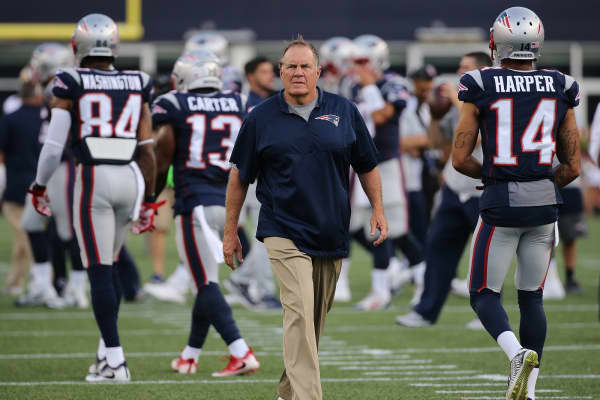

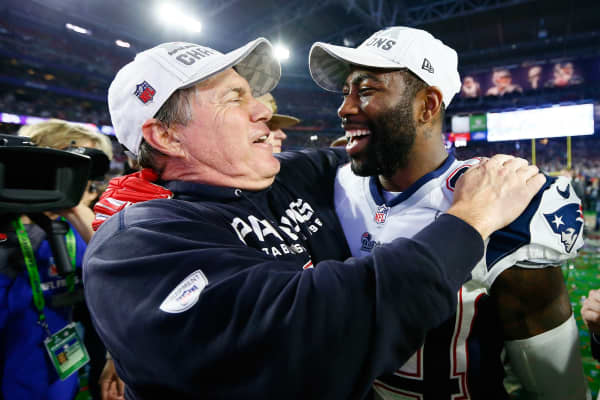
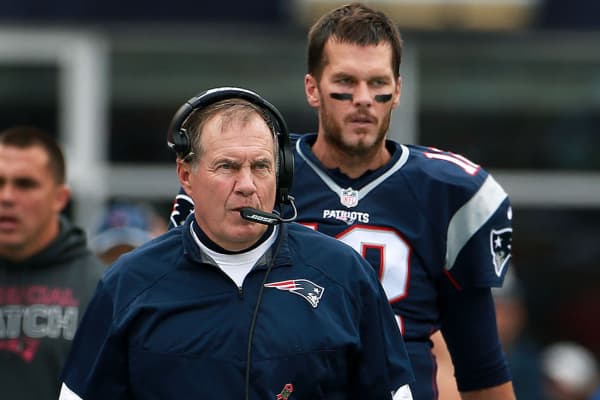
5. Leadership means never resting on your laurels
Ask Belichick if he's still celebrating the stunning come-from-behind Super Bowl victory in February and you get another "You're killing me here" look.
"We're onto 2017. No one cares about 2016 anymore," he says. "You can't look back. We don't talk about last year. We don't talk about next week. We talk about today, and we talk about the next game. That's all we can really control."
See also: Bill Belichick plays word-association game with 'Deflategate,' 'Aaron Hernandez' and 'the media'
In other words, it's OK to celebrate a big win — but get it over with fast.
Oh, come on, not even a little parading the championship rings around the house? Belichick pauses — and smiles. (Yes, he smiles.)
"I'm not a jewelry guy," he says.
"Ask Bill Belichick if he's one of the winningest coaches in NFL history
because he's a football genius, and he makes a face that's familiar to
anyone who has ever seen him annoyed. Which is, basically, everyone.
Roughly translated, the face says, "You're killing me here."
But then, after a sigh, because, after all, he's agreed to talk about his life and career in a wide-ranging interview with CNBC, Belichick offers: "I think I know a little about coaching. I think I know a little about leadership.
"You think?
"Love the Patriots or hate them, Belichick's 209-78 record for New England says it all. Football teams do not lead themselves, and they certainly do not lead themselves to five Super Bowl victories.
So, according to Belichick, what exactly is
the "little" he knows about leadership? His answer, it turns out, could
fill a book, but here are the top five principles that emerged over
nearly two hours of conversation.
Roughly translated, the face says, "You're killing me here."
But then, after a sigh, because, after all, he's agreed to talk about his life and career in a wide-ranging interview with CNBC, Belichick offers: "I think I know a little about coaching. I think I know a little about leadership.
"You think?
"Love the Patriots or hate them, Belichick's 209-78 record for New England says it all. Football teams do not lead themselves, and they certainly do not lead themselves to five Super Bowl victories.
Maddie Meyer | Getty Images
1. Leadership means building a team that's exhaustively prepared, but able to adjust in an instant
"The only sign we have in the locker room is from 'The Art of War.' 'Every battle is won before it is fought,'" says Belichick, who started breaking down films of opposing teams when he was 7 years old and hanging out with his dad, Steve, an assistant coach at Annapolis.
"You [have to] know what the opponents can do, what their strengths and weaknesses are ... [and] what to do in every situation," he says.
That ability — to adapt on a dime — is why Belichick says he spends so much time building teamwork, from having the team train with Navy SEALs, to organizing trivia nights, where, incidentally, all social media is banned.
Watch the full interview: Bill Belichick on leadership, winning, and Tom Brady not being a 'great natural athlete'
"Nobody is against [social media] more than I am. I can't stand it," Belichick says. "I think it's important for us, as a team, to know each other. Know our teammates and our coaches. To interact with them is more important than to be 'liked' by whoever on Chatrun." (In the same conversation, he also derided "InstaFace" in all seriousness.)
"The only sign we have in the locker room is from 'The Art of War.' 'Every battle is won before it is fought,'" says Belichick, who started breaking down films of opposing teams when he was 7 years old and hanging out with his dad, Steve, an assistant coach at Annapolis.
"You [have to] know what the opponents can do, what their strengths and weaknesses are ... [and] what to do in every situation," he says.
That ability — to adapt on a dime — is why Belichick says he spends so much time building teamwork, from having the team train with Navy SEALs, to organizing trivia nights, where, incidentally, all social media is banned.
Watch the full interview: Bill Belichick on leadership, winning, and Tom Brady not being a 'great natural athlete'
"Nobody is against [social media] more than I am. I can't stand it," Belichick says. "I think it's important for us, as a team, to know each other. Know our teammates and our coaches. To interact with them is more important than to be 'liked' by whoever on Chatrun." (In the same conversation, he also derided "InstaFace" in all seriousness.)
Jim Rogash | Getty Images
2. Leadership means having the discipline to deploy your "dependables"
You know your star performers? The ones who can dazzle and amaze, except when they don't? They're definitely appealing, Belichick admits.
But over the years, he's learned they're not his type. He'd rather stick with his tried-and-true people — call them his "dependables."
"There have been times when I've put too much responsibility on people. ... They might have been the most talented, or the people you hoped would do the right or best thing, and they didn't come through," Belichick says.
Big mistake.
When it comes to getting things done, especially critical things, forget the high flyers: "You have to go with the person who you have the most confidence in, the most consistent," Belichick says. "And if it doesn't work, it doesn't work, but I'm going down with that person."
You know your star performers? The ones who can dazzle and amaze, except when they don't? They're definitely appealing, Belichick admits.
But over the years, he's learned they're not his type. He'd rather stick with his tried-and-true people — call them his "dependables."
"There have been times when I've put too much responsibility on people. ... They might have been the most talented, or the people you hoped would do the right or best thing, and they didn't come through," Belichick says.
Big mistake.
When it comes to getting things done, especially critical things, forget the high flyers: "You have to go with the person who you have the most confidence in, the most consistent," Belichick says. "And if it doesn't work, it doesn't work, but I'm going down with that person."
Jim Rogash | Getty Images
3. Leadership means being the boss
Belichick says this principle first came to him when he was just 23, addressing the Colts as a special teams coach. Two players, one of them a talented starter, spent the beginning of the meeting giggling and chatting. Inside, Belichick recalls, he was seething: "I'm not afraid of these guys. It's either [them] or me. We can't run a team like this."
Finally, he let loose. "Look, either you shut up or you get out of here. That's it."
It worked.
And it was an aha moment that has guided him since. "I don't care if they're a star player," he says. "I don't care who they are. You have to set the tone."
Belichick says this principle first came to him when he was just 23, addressing the Colts as a special teams coach. Two players, one of them a talented starter, spent the beginning of the meeting giggling and chatting. Inside, Belichick recalls, he was seething: "I'm not afraid of these guys. It's either [them] or me. We can't run a team like this."
Finally, he let loose. "Look, either you shut up or you get out of here. That's it."
It worked.
And it was an aha moment that has guided him since. "I don't care if they're a star player," he says. "I don't care who they are. You have to set the tone."
Kevin C. Cox | Getty Images
4. Leadership means caring about everything going on in the lives of your people
Maybe the previous rule would make you think otherwise, but Belichick strongly believes you must see your team not just as players, per se, but as people who have full, three-dimensional, and often messy lives.
"There are a lot of things that affect what happens on the field that occur off the field," he says. Players "have wives and girlfriends. And they have babies. And they have personal situations. They have parents that are sick. All of it runs in together."
See also: 4 career lessons Bill Belichick wants millennials to know (including his own kids)
Work and life, in other words, are inseparable, and it's incumbent on leaders to help their people sort through it. "The more you and the organization can help take care of personal situations," he says, "the smoother the ship runs on the football end."
Maybe the previous rule would make you think otherwise, but Belichick strongly believes you must see your team not just as players, per se, but as people who have full, three-dimensional, and often messy lives.
"There are a lot of things that affect what happens on the field that occur off the field," he says. Players "have wives and girlfriends. And they have babies. And they have personal situations. They have parents that are sick. All of it runs in together."
See also: 4 career lessons Bill Belichick wants millennials to know (including his own kids)
Work and life, in other words, are inseparable, and it's incumbent on leaders to help their people sort through it. "The more you and the organization can help take care of personal situations," he says, "the smoother the ship runs on the football end."
Boston Globe | Getty Images
Ask Belichick if he's still celebrating the stunning come-from-behind Super Bowl victory in February and you get another "You're killing me here" look.
"We're onto 2017. No one cares about 2016 anymore," he says. "You can't look back. We don't talk about last year. We don't talk about next week. We talk about today, and we talk about the next game. That's all we can really control."
See also: Bill Belichick plays word-association game with 'Deflategate,' 'Aaron Hernandez' and 'the media'
In other words, it's OK to celebrate a big win — but get it over with fast.
Oh, come on, not even a little parading the championship rings around the house? Belichick pauses — and smiles. (Yes, he smiles.)
"I'm not a jewelry guy," he says.
Saturday, December 16, 2017
Rejected! Continued
 |
| Frederick the Great of Prussia (Germany) mid 1700s |
Frederick the Great was the legendary King of Prussia (Germany) in the mid and late 1700's. He famously declared: "It's not a disgrace to be defeated. It's a disgrace to be surprised."
You have lost an order and you're now analyzing why it was lost. There is absolutely no reason to be dishonest with yourself. Were your sales calls well made, well prepared, and well argued? Honestly? So here are some facts:
You have lost an order and you're now analyzing why it was lost. There is absolutely no reason to be dishonest with yourself. Were your sales calls well made, well prepared, and well argued? Honestly? So here are some facts:
According to Steve W. Martin in a recent survey of 230 buyers
1. Buyers rate two-thirds of business to business salespeople as being average or poor
2. Just 18% of salespeople are classified by buyers as trusted advisors whom they respect
3. Only 31% of salespeople can talk effectively with senior executives
4. 54% of salespeople clearly explain how their solution positively impacts a customer’s business
So what's the problem? According to Martin:
5. Buyers sense the salesperson’s agenda to make the sale and can feel pressured ["Transaction Man will do anything for the order"]
6. Salespeople give a canned pitch and don’t listen to buyer requirements
7. Differences in communication style and personality can alienate buyers
8. Salespeople don’t adapt their approach to differing gender perspectives
9. Salespeople want to develop relationships but buyers are too busy
6. Salespeople give a canned pitch and don’t listen to buyer requirements
7. Differences in communication style and personality can alienate buyers
8. Salespeople don’t adapt their approach to differing gender perspectives
9. Salespeople want to develop relationships but buyers are too busy
A poorly prepared sales call in which the salesperson can't answer the customer's questions, can't respond the competitive issues, and doesn't know how their product applies to the customer's needs leads to certain defeat. The salesperson has been surprised by poor preparation, has not prepared himself for the battle.
This can be prevented three ways: preparation, preparation, and preparation. Know your product, know your competitors' products and know your customer.
We will be going into great depth on this subject in future posts. There is a lot to be gained from analyzing the lost sale.
We will be going into great depth on this subject in future posts. There is a lot to be gained from analyzing the lost sale.
Wednesday, December 13, 2017
Rejected!

Every salesperson faces rejection, sometimes many times a
day or week depending on what type of product you’re selling. I remember to this day, forty years later,
losing a bid on a major project. This
was a project that was going to earn me the respect of my boss and my
peers. This project was a game changer
and would put me over the top on my quota.
Back in those days, if you had to call someone, you did it from your car
window over a pay phone. I called the
customer and asked who had won the bid and found out it was not me. I was shocked. I had done everything right. I had a product that was unique and solved
the customer’s problem. I lost to a
competitor who could not touch the quality of my product. I sat in my car for an hour, unable to adjust
to this loss—to my loss. It was a huge
project and everyone was looking at it and waiting for me to get the
order. Now I had to tell everyone that I
didn’t get it.
Rejection is such a personal thing for a salesperson. It’s never the product that’s rejected. It’s us. The customer didn’t like ME. I did something wrong. What makes a salesperson great is their personal involvement in the sale. What makes a salesperson successful is their personal involvement in the sale. But once the decision is made, once you’ve done everything possible, everything within your power, and you lose the sale, it has to stop being personal. It now must become analytical.
I have written in prior posts about the “Debrief” process. Sit down with someone you respect and go over the process and try to figure out what you did that you could have done better.
I have a firm belief that the salesperson who has the relationship with the buyer wins the order. The issue is what exactly the relationship is. The most difficult situation is when the seller (not you) and the buyer are personal friends. That’s a hard relationship to overcome. Superior quality and lower price may help, but often the buyer just tells his friend your deal and if the other seller can meet your deal, you lose. More and more, personal relationships do not trump a better product at a better price, but there are situations when it does and be prepared for rejection. The opposite of that situation is, of course, when you have the personal relationship with the buyer. The real danger here is taking that relationship for granted. FIRST COMMANDMENT OF SALES: NEVER ASSUME YOU HAVE THE ORDER, NO MATTER HOW CLOSE YOU ARE TO THE BUYER. The second most difficult situation is when the buyer has already bought your competitor’s products but has no personal relationship with the other salesperson. We will discuss this in the next post.
Rejection is such a personal thing for a salesperson. It’s never the product that’s rejected. It’s us. The customer didn’t like ME. I did something wrong. What makes a salesperson great is their personal involvement in the sale. What makes a salesperson successful is their personal involvement in the sale. But once the decision is made, once you’ve done everything possible, everything within your power, and you lose the sale, it has to stop being personal. It now must become analytical.
I have written in prior posts about the “Debrief” process. Sit down with someone you respect and go over the process and try to figure out what you did that you could have done better.
I have a firm belief that the salesperson who has the relationship with the buyer wins the order. The issue is what exactly the relationship is. The most difficult situation is when the seller (not you) and the buyer are personal friends. That’s a hard relationship to overcome. Superior quality and lower price may help, but often the buyer just tells his friend your deal and if the other seller can meet your deal, you lose. More and more, personal relationships do not trump a better product at a better price, but there are situations when it does and be prepared for rejection. The opposite of that situation is, of course, when you have the personal relationship with the buyer. The real danger here is taking that relationship for granted. FIRST COMMANDMENT OF SALES: NEVER ASSUME YOU HAVE THE ORDER, NO MATTER HOW CLOSE YOU ARE TO THE BUYER. The second most difficult situation is when the buyer has already bought your competitor’s products but has no personal relationship with the other salesperson. We will discuss this in the next post.
Sunday, August 27, 2017
Without Sales, Everything Stops!

So what do we sales folks do when the hammer comes down: "we need more sales or we have to lay off manufacturing personnel"?
To get out of this situation, we need to go back to basics:
1. Start with your existing and past customers. Is what you sold them in need of replacement? Do they need more of what your sold them--has their business grown? Has your product added technology that would benefit your customer? So, take your list of customers and start calling them--existing customers are the best source of future business.
2. Next, get a list of customers you lost. There are a lot of reasons the customer who gave the order to someone else may no longer be happy with their decision. Call them; ask the question. That five minutes may be well spent.
3. Get out of your comfort zone! Sales people love to keep going back to the customers who make them comfortable--who accept them and like them. This is one reason why sales dry up. New customers and new markets for your products breathe life into your sales. Find new customers who are in the same business as your existing customers and go see them. Find new markets for your products and get out to see those new potential customers. Use Google; use manta.com; use linkedin.com--use technology to find these new customers. If your existing customers can't provide enough sales to keep the production lines running, then you have to find new customers and new markets. You can't protect your customers if they can't give you enough sales to make your bosses happy.
4. Never, ever use the excuse that it's the other sales folks who are not pulling their weight. It's on you. Take responsibility. Don't wait for others to pick up the slack. It seems unfair, but sales is responsible for keeping the production line running. "Without sales, everything stops." Do not take your job lightly. People depend on you doing your job. Take what you do very seriously and do the absolute best you can--families depend on you--and not just your own.
Tuesday, August 22, 2017
Start by Making Your Bed
 |
| Admiral William H McRaven |
In a commencement address to University of Texas students, Admiral McRaven offered Ten Life Lessons he said he learned by being a Navy SEAL.
"Lesson Number One: If you want to change the world, start off by making your bed."Why is this task so important? Because if you start the first task of the day by being organized and orderly, that sets the mood for the rest of the day. Making a bed well takes a little time and more discipline than most people realize. Try it and see if it makes a difference. This may not work if your spouse happens to be still sleeping. But the underlying message is to start the day by organizing yourself. It may mean simply sitting at the breakfast table and making a list of your tasks for the day.
"Lesson Number Two: If you want to change the world, find someone to help you paddle."I have written many times that we cannot be successful in sales by ourselves. We need to seek help, always, because other people see things that we don't and those things help to close sales.
"Lesson Number Three: If you want to change the world, measure a person by the size of their heart, not the size of their flippers."We are often influenced by things that don't matter and we don't pay attention to the little things that do matter. Take your blinders off and really look at the little things around you; look into a person's heart. Successful sales people need to understand people and their needs: look into their hearts.
"Lesson Number Four: If you want to change the world, get over being a sugar cookie and keep moving forward.We, in the sales profession, often feel "entitled" to that order--we deserve it because we worked harder than the other guy. Well, McRaven says, get over it and move on. The other guy got it and you need to check your ego at the door.
"Lesson Number Five: If you want to change the world, don't be afraid of the circuses."We live in a crazy world. People make ordering decisions for reasons that we'll never understand. Unexplained failure--the loss of an order for reasons that don't make any sense--will happen over and over. Get over it and move on.
"Lesson Number Six: If you want to change the world, sometimes you have to slide down the obstacle head first."The meaning of this lesson is not obvious. In our sales world, "sliding down the obstacle head first" means that sometimes you have to accomplish the selling task by taking a totally different approach to the customer--think outside the box. This is why it's good to talk to people and get input. Someone may show you a different way--headfirst.
"Lesson Number Seven: If you want to change the world, don't back down from the sharks."We all know who the sharks are--they're our competitors who, sometimes, will do anything to derail the sale we're trying to make. The lesson here is not to back down. Don't become a shark yourself, but aggressiveness in the pursuit of a sale is not a fault. As I have said to my sales folks often: GTO (Get the Order). That's the game we have to play.
"Lesson Number Eight: If you want to change the world, you must be your very best in your darkest moment."Everyone experiences dark moments. In our world, it's often the loss of a big order that everyone was looking for. It is at this moment that you go into the "debrief" mode that I've written about several times. Understand what got you into this place and make sure you figure out how not to get there again--get help, talk to people, don't go through it alone.
"Lesson Number Nine: If you want to change the world, start singing when you're up to your neck in mud."There's another way to put this: "never let them see you sweat." In our sales world, we have to be optimistic no matter what happens. I like to use the example of a successful baseball player: a successful major league baseball player gets an average of 3 hits for every 10 at bats and may experience 20 or more at bats with no hits. A pitcher may have a horrible inning, but he has to come back and pitch again in the next inning. When you're up to your neck in mud, sing. Try it.
"Lesson Number Ten: If you want to change the world, don't ever, ever ring the bell.""Ringing a bell" for a SEAL is quitting. A salesperson, like a Navy SEAL, like a baseball player, should never give up. Keep swinging; keep fighting; keep finding new customers and taking care of old customers--just don't ring the bell.
"Lesson Number One: If you want to change the world, start off by making your bed."Why is this task so important? Because if you start the first task of the day by being organized and orderly, that sets the mood for the rest of the day. Making a bed well takes a little time and more discipline than most people realize. Try it and see if it makes a difference. This may not work if your spouse happens to be still sleeping. But the underlying message is to start the day by organizing yourself. It may mean simply sitting at the breakfast table and making a list of your tasks for the day.
"Lesson Number Two: If you want to change the world, find someone to help you paddle."I have written many times that we cannot be successful in sales by ourselves. We need to seek help, always, because other people see things that we don't and those things help to close sales.
"Lesson Number Three: If you want to change the world, measure a person by the size of their heart, not the size of their flippers."We are often influenced by things that don't matter and we don't pay attention to the little things that do matter. Take your blinders off and really look at the little things around you; look into a person's heart. Successful sales people need to understand people and their needs: look into their hearts.
"Lesson Number Four: If you want to change the world, get over being a sugar cookie and keep moving forward.We, in the sales profession, often feel "entitled" to that order--we deserve it because we worked harder than the other guy. Well, McRaven says, get over it and move on. The other guy got it and you need to check your ego at the door.
"Lesson Number Five: If you want to change the world, don't be afraid of the circuses."We live in a crazy world. People make ordering decisions for reasons that we'll never understand. Unexplained failure--the loss of an order for reasons that don't make any sense--will happen over and over. Get over it and move on.
"Lesson Number Six: If you want to change the world, sometimes you have to slide down the obstacle head first."The meaning of this lesson is not obvious. In our sales world, "sliding down the obstacle head first" means that sometimes you have to accomplish the selling task by taking a totally different approach to the customer--think outside the box. This is why it's good to talk to people and get input. Someone may show you a different way--headfirst.
"Lesson Number Seven: If you want to change the world, don't back down from the sharks."We all know who the sharks are--they're our competitors who, sometimes, will do anything to derail the sale we're trying to make. The lesson here is not to back down. Don't become a shark yourself, but aggressiveness in the pursuit of a sale is not a fault. As I have said to my sales folks often: GTO (Get the Order). That's the game we have to play.
"Lesson Number Eight: If you want to change the world, you must be your very best in your darkest moment."Everyone experiences dark moments. In our world, it's often the loss of a big order that everyone was looking for. It is at this moment that you go into the "debrief" mode that I've written about several times. Understand what got you into this place and make sure you figure out how not to get there again--get help, talk to people, don't go through it alone.
"Lesson Number Nine: If you want to change the world, start singing when you're up to your neck in mud."There's another way to put this: "never let them see you sweat." In our sales world, we have to be optimistic no matter what happens. I like to use the example of a successful baseball player: a successful major league baseball player gets an average of 3 hits for every 10 at bats and may experience 20 or more at bats with no hits. A pitcher may have a horrible inning, but he has to come back and pitch again in the next inning. When you're up to your neck in mud, sing. Try it.
"Lesson Number Ten: If you want to change the world, don't ever, ever ring the bell.""Ringing a bell" for a SEAL is quitting. A salesperson, like a Navy SEAL, like a baseball player, should never give up. Keep swinging; keep fighting; keep finding new customers and taking care of old customers--just don't ring the bell.
Tuesday, August 15, 2017
Great Salespeople are Great Leaders
 |
| Sinone Askew, first black woman appointed West Point Captain of Cadets |
We could say the same thing about some really good salespeople--they "are really high performing, they just go about their own business." But great salespeople are leaders--figuring out how to connect customer with solutions.
Simone Askew was interviewed on CBS News and asked how she got to the top--against all odds. Her response was that she couldn't get there by herself. She needed help--other people--mentors, colleagues, friends--to get there. Askew said: "Allow yourself to be a vessel. Throughout my cadet career I've just really focused on being poured into, seeking advice, seeking development, leadership mentors wherever I could. Just truly be a vessel and be poured into."
We all make a big mistake when we think we can succeed without help. Really successful salespeople reach out to others to give them insights and intelligence that will overcome the barriers to sales.
And what keeps us from asking for help? Pride. As I have said in earlier posts, humility is a key to sales success. Our egos are a huge barriers to success in sales.
Don't be afraid to reach out and ask for help to close that order, or to prepare for that sales presentation. Dare to be great by daring to be humble.
Bring all possible resources to bear when you go after that new prospect or try to close that big sale.
Sunday, August 13, 2017
Anatomy of the Lost Order II
 |
| The late Peter Drucker, Mangement Cunsultant |
If you Google "Peter Drucker" (world famous management consultant and author of many books) you will find hundreds of great quotations. His most famous one was "Doing the right thing is more important than doing the thing right." For purposes of this post, we're going to examine his quotation: "Culture eats strategy for breakfast, technology for lunch, and products for dinner, and soon thereafter, everything else too."
Culture is a "top down" thing; it determines the way we look at ourselves and our jobs. Let me give an example. A company that I'm familiar with demands that its salespeople "sell" a minimum of three units a month. The boss doesn't care how it gets done, just that it gets done. You can see how this culture (if you can call it that) eats strategy, technology and products right up. Everything takes a back seat to the sale--to the transaction. (Remember Transaction Man?)
But, if you know you're competing against Transaction Man (a salesperson so desperate to get the order to make a quota that he'll give the product away at very little margin), you know how to beat him.
Rebekah Iliff discusses this in the July 31, 2017 issue of INC magazine.
Relationships build companies, not transactions. "Making an emotional connection with the buyer is what matters." The culture that we're promoting is a relationship driven culture, not a transaction driven culture.
To beat Transaction Man to the order you have to work harder to build a relationship with the customer. You have to understand that all Transaction Man has to sell is price--he has to get the order. Therefore you have to find a connection with the buyer that goes beyond price. Iliff's suggestions:
1. "Make an emotional connection with the customer." This will demand some homework. Use LinkedIn and Facebook to understand his personality; use Google and Manta to understand his company. Do your homework before making that first sales call. Remember, you have to beat Transaction Man and it better be something other than price that sells your product.
2. Understand that the customer has to be comfortable that you have to demonstrate that you know more about your product than Transaction Man. Don't be afraid to get help in this area. Be humble, ask your colleagues for help. Overconfident Man loses to Transaction Man every time.
3. "Set clear expectations and follow them." Make sure the customer understands that what you're offering transcends price; you're putting yourself and your company into the mix.
4. "Communicate til you're blue in the face." Never, ever say--"this order is in the bag." Overconfident Man loses to Transaction Man every time.
Be Humble and Assume Nothing. Your culture is relationships, not transactions. Relational culture beats transactional culture.
PRODUCT KNOWLEDGE, HUMILITY, RELATIONSHIP BUILDING. These are the things that beat someone who is just using pricing to get an order.
Saturday, August 5, 2017
Anatomy of a Lost Order

Understanding how an order was lost demands brutal honesty--and honest self examination--something salespeople are often reluctant to expose. The Harvard Business Review did a survey of 230 buyers, asking them to grade the salespeople who come to them to sell their products. The results are shocking: the buyers rated only 12% of salespeople as "excellent"; 23% as "good"; 38% as "average"; and 27% as "poor". There was no corresponding interview of salespeople to ask them how they rated themselves, but I suspect 80% of us think we're "excellent" and 20% think we're "good". Ego is important when you have a job that involves so much rejection, but ego is a deal killer in the buyer's office.
What are buyers looking for?
1. They want to TRUST the salesperson; they want to feel that the salesperson is being honest about his product and what it can do--and being honest about what it can't do.
2. They want a salesperson who can converse intelligently. This is huge! How does a 30 year old salesperson converse intelligently with a 55 year old buyer--one who's heard it all? This demands a well-rounded salesperson: one who reads the newspaper, reads books, knows "stuff"--not just his product. This demands a salesperson who reads about and understand the customer's business, who looks around the customer's office and sees the customer's interests and can talk about lots of things.
3. The buyer wants to understand how the salesperson's product is going to help his company and how the salesperson's company is going to be there to help solve aftermarket problems.
4. The buyer doesn't want to feel like he's being forced to order. I've known lots of salespeople who push the issue--"my kid's going to college, I need the commission. Come on, give me the order." This is not a good strategy. Giving you the order puts the buyer at risk (what if he made a mistake with your product). You have to make him feel comfortable with giving you the order.
5. Make a personal connection with the buyer and make sure he understands that you will be there for him if there are any problems with the order.
6. Be humble. Buyers hate arrogance. If your product was the best in the world, they wouldn't need salespeople; if your company were the best in the world, they wouldn't need you. You, the salesperson, are simply a channel to get your product into the customer's hands to help him solve a problem. Be the best channel you can be.
TRUST, HONESTY, HUMILITY, COMFORT, CONNECTION--these are the traits that make you "excellent".
When you analyze why you lost that order, you have to ask yourself if you communicated these traits to the buyer. Ask honestly and brutally.
Subscribe to:
Posts (Atom)